
by William Moon
This isn’t a round-number anniversary or anything, but a recent T-shirt purchase by my wife has got me in a Mellon Collie place. And considering The Smashing Pumpkins’ hit 1995 double album is over two hours long, you can stay in that place for a long time. (Also I strongly considered including this as another entry in the The Bats**t Chronicles, as anything involving Billy Corgan is at least kind of batshit, but ultimately I decided to focus more on other aspects of the record.)

Like pretty much all double albums, Mellon Collie and the Infinite Sadness is a sprawling mess. For some, that can be a turn-off, but I usually find myself drawn to the sprawl. If you’re looking for a more cohesive Pumpkins record, certainly you can’t go wrong with 1993’s Siamese Dream, which broke the band big, or their 1991 indie debut Gish. Both of those records were co-produced by Corgan and Butch Vig, grunge era mega-producer and drummer for Garbage, and they carry with them a similar air of distinctly ’90s nostalgia. But Mellon Collie is a different beast. Wishing to avoid repeating themselves sonically, Corgan opted not to work with Vig again, instead favoring the duo of Flood and Alan Moulder to produce the record. (Moulder had engineered and mixed Siamese Dream, and he and Corgan bonded over Moulder’s prior work with My Bloody Valentine.) With that decision differentiating the album from what had come before it and some tragic circumstances differentiating it from what would come after, Mellon Collie stands as a bit of an island unto itself in the band’s discography. (Full tracklisting here.)
Flood pushed the band to approach the recording process differently than they had with their prior records, especially Siamese Dream, which was an infamously difficult and expensive album to get made. (Due to infighting within the band and the pressure Corgan was putting on himself and others to succeed, he and Vig largely constructed the record themselves through an arduous overdubbing process that mostly didn’t involve the other Pumpkins.) This time around, the group spent much of their time rehearsing material outside of a traditional studio, which both helped keep all the members involved in the process and allowed the band to record an immense amount of new material for the record, which could’ve been a quadruple album if the band and Virgin Records had so desired. (One thing about Corgan, the man is prolific. Of the reported 57 songs mooted for Mellon Collie, 28 made the final cut, with two more being included on the original vinyl pressing. The rest would appear on the box set The Aeroplane Flies High, which came out in late 1996.)
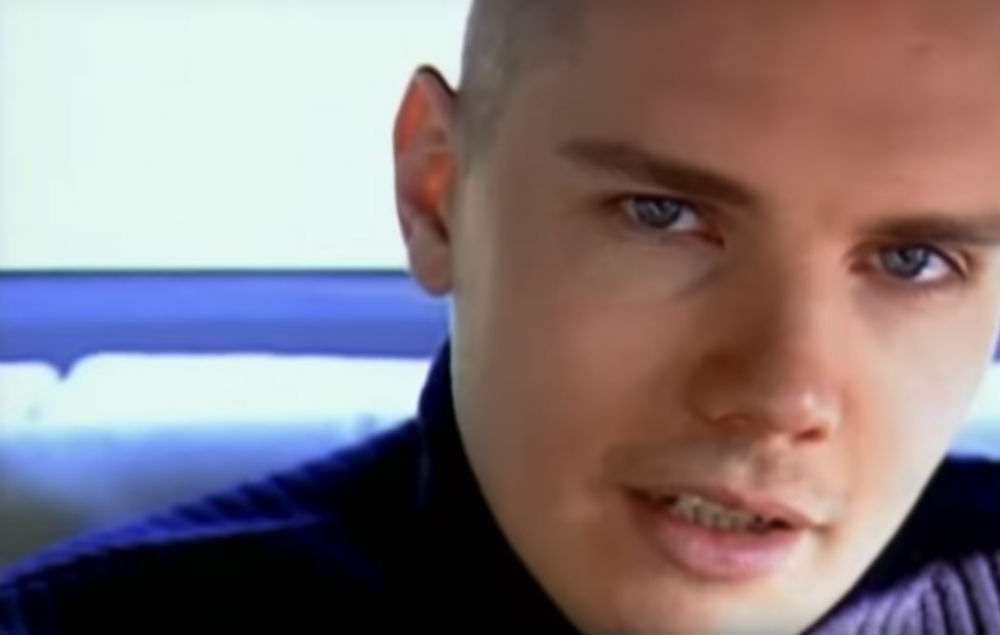
This avalanche of new material contributed heavily to the varied musical palette of the record. While Gish and Siamese Dream weren’t AC/DC-level repetitive, there’s a clearer sonic throughline in both, particularly the obsessively fussed-over Dream. That’s not a bad thing, but the wilder shifts from track to track on Mellon Collie are their own kind of reward, too. Sometimes the results can be downright humorous, such as when the wistful Top 40 smash “1979” bleeds right into the hellishly distorted “Tales of a Scorched Earth”. But Pumpkinland can be seen in full here, which is on the whole a good thing.
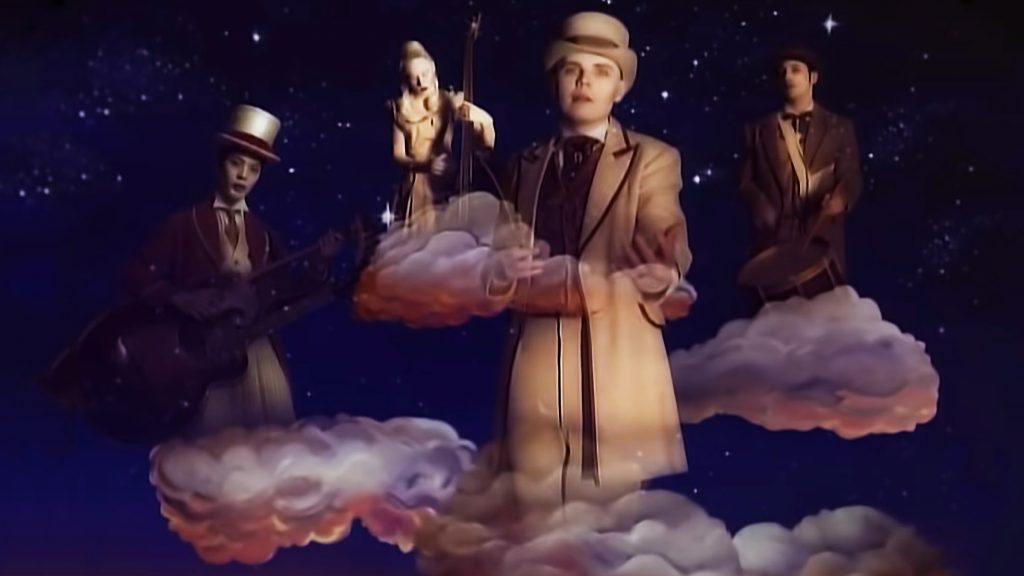
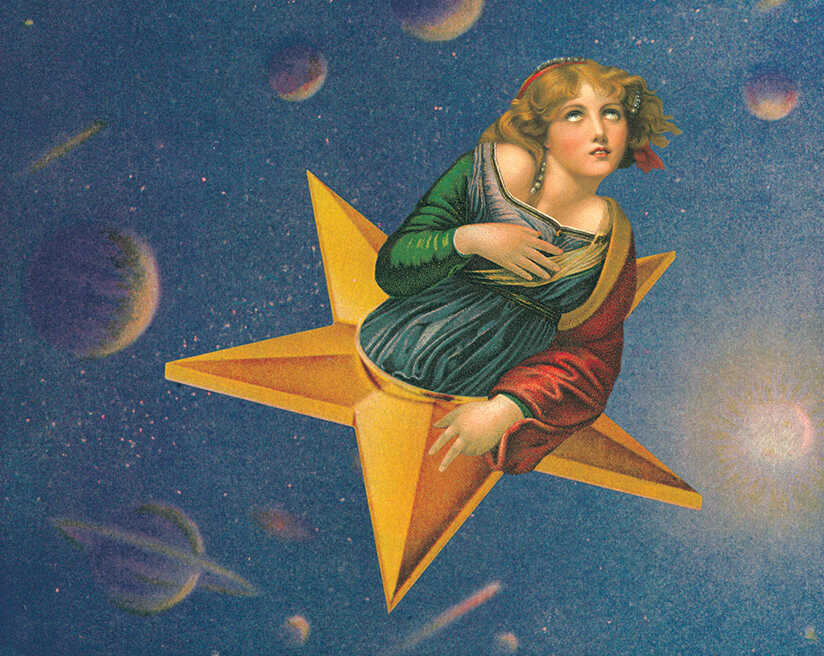
If you want to be reductive, you could crudely group the tracks into three major categories – dream pop, ’90s alt rock, and metal. While it was their interest in the latter of those genres that initially set the band apart from many of their punk-rooted grunge era contemporaries, it feels – to me, at least – like dream pop occupies the most space in the group’s legacy. It’s well represented here, both through successful singles like “1979” and “Tonight, Tonight”, as well as in album cuts like the instrumental title track, “Galapogos”, and “By Starlight”. Pieces like these, along with expansive Pumpkin epics like the excellent “Porcelina of the Vast Oceans” and “Thru the Eyes of Ruby”, sit very comfortably alongside the album’s artwork, a series of illustrations and collages put together by Wisconsin-based artist John Craig that are full of fantastical, Old World vibes, vibes which then carry over into Jonathan Dayton and Valerie Faris’s landmark, Georges Méliès-inspired video for “Tonight, Tonight”.
The overriding ’90s-ness of the record largely stems from its dreamier pieces, but the more straightforward alt rock numbers on the album certainly help, too. The radio hit “Muzzle” is close to the very center of what guitar-driven mainstream alt was during this period, with Corgan’s self-referential, emo-ish lyrics approaching unintentional parody. The album track “Here Is No Why” is another great example, with its lumbering rhythm setting the stage for some excellent dynamics as the song progresses, particularly in the pre-solo bridge. “Zero”, the third single released from the album, showcases the band’s metal influence with its multi-tracked main riff, and Corgan’s “Emptiness is loneliness” vocal break in the middle is both memorable and comical. The metal influences are felt even more on the lead single, “Bullet with Butterfly Wings”, and the song Corgan originally wanted to be the lead single, the superior “Jellybelly”. The former is either the band’s most or second-most well-known song (along with “1979”), while the latter is the most successful hybrid of mainstream rock and metal in the group’s career.
And speaking of metal, some of the tracks here are pretty much straight-up metal numbers filtered through a Pumpkins lens. Some of these – “Fuck You (An Ode to No One)”, “X.Y.U.” – can be a little tiresome. But the double album’s less focused second disc opens with two killer numbers – the heavy “Where Boys Fear to Tread” and the propulsive, almost industrial “Bodies”. Them being followed by the flange-driven ballad “Thirty-Three” is another of the album’s whiplash track listing moves, but this one works, perhaps simply because all three songs are good.
The appearance of a drum machine on a few tracks, particularly “Thirty-Three” and “1979”, forecasts the electronic direction the band would pursue on their subsequent record, 1998’s divisive Adore, with much of their material from this period suffering from the departure of powerhouse drummer Jimmy Chamberlin. (Chamberlin’s heroin problems had been a major issue during the recording of Siamese Dream, and although he’d seemingly cleaned up during the Mellon Collie period, he and touring keyboardist Jonathan Melvoin both overdosed in New York while the band was touring in 1996. Melvoin died, and Chamberlin was arrested and then fired by the band, who continued as a trio.)
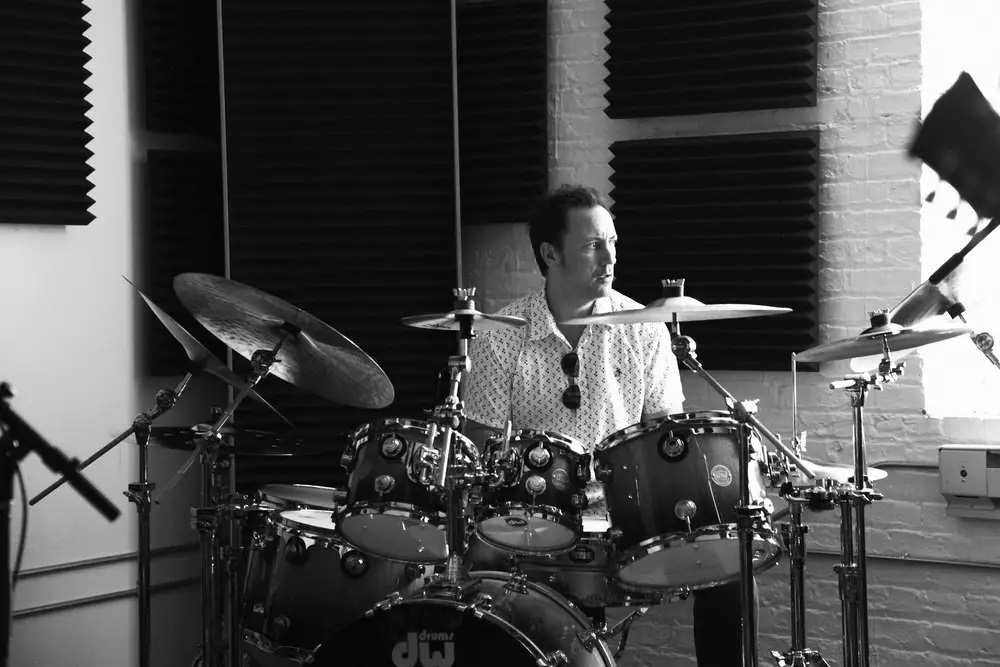
The jazz-trained Chamberlin was one of the most technically proficient drummers of his era, and while Corgan’s dominance of the band’s output and general image was nigh absolute, the Pumpkins aren’t really the Pumpkins unless Chamberlin is on the skins. (He’d get clean and return to the band multiple times over the subsequent decades, most recently in 2018 when he and original guitarist James Iha rejoined the fold.) His work on “Tonight, Tonight” is a great showcase for his formal skills with its relentless snarework and tight rolls, while his trademark power is the engine that pushes all the heavier numbers forward (“Jellybelly” and “Bodies” really stand out in this regard). The drums also really pop on the expansive “Porcelina of the Vast Oceans”, as he modulates between the cymbal wash-heavy intro to the crackling choruses to the nautical, bobbing verses with ease.

Lyrically, Corgan (and James Iha, who wrote two songs) wanted the songs to be directed at a young audience, with the frontman essentially addressing his younger self throughout the record. And that means there’s a lot of cringe here, though that should be taken as a feature and not necessarily a bug. I’ve already mentioned the “Emptiness in loneliness” vocal break in “Zero” and…well…all of “Bullet with Butterfly Wings” and “Muzzle”, but lines like “We’ll crucify the insincere” from “Tonight, Tonight” and the repeated “Love is suicide” refrain in “Bodies” are pretty much Corgan’s lyrical style on a platter – unabashedly over the top with little regard for the snark of haters. His vocal deliveries only reinforce this point, with my favorite moment from him coming after the guitar solo in “Here Is No Why”, when he croaks out the first lines to the following chorus. It’s ridiculous and totally great. (He sings “And if you’re giving in, then you’re giving up” if you’re curious.)
At its core, the record is The Smashing Pumpkins dialed up to 11, with all the good and bad that implies. Corgan and Iha’s guitar work is as jagged and aggressive as ever, Chamberlin is as powerful as ever, Corgan’s lyrics and vocals are Corgan to the max, and the band’s dreamy side was never dreamier. (The only member who really gets short shrift here is bassist D’arcy Wretzky, whose role in the group was slowly reduced throughout the decade until she left the band in 1999 never to return.)
Taken together it’s an overwhelming glut of music, inspired by the bitchin’ classic rock double LPs of yore (Corgan overtly called it “The Wall for Generation X”), but the content within is as distinctly ’90s as it gets. So load it up on Spotify or whatever and hearken back to when you spent much of your time just driving around, or at the mall just walking around, or outside just sitting around, then doing the Dew and playing GoldenEye or Mortal Kombat 3 when you got home. And if “1979” sneaks up on you and turns you into a nostalgic, blubbering mess, just let it out. (Then laugh through the tears when “Tales of a Scorched Earth” comes on.)
 Octopus Man
Leave a comment